Eastrington Primary
Enrich - Enjoy - Excel
Portington Road, Eastrington, Goole. DN14 7QE
To find out where we are visit view a map on our Contact Us page.
Science
Science

Subject Coordinator- Mrs Donna Goodwin
Intent
Science teaching at Eastrington Primary School aims to give all children a strong understanding of the world around them whilst acquiring specific skills and knowledge to help them to think scientifically, to gain an understanding of scientific processes and also an understanding of the uses and implications of Science, today and for the future.
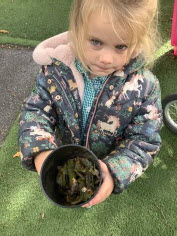
At Eastrington Primary School, scientific enquiry skills are embedded in each topic the children study and these topics are revisited and developed throughout their time at school. Topics, such as Plants, are taught in Key Stage One and studied again in further detail throughout Key Stage Two. This model allows children to build upon their prior knowledge and scientific vocabulary and increases their enthusiasm for the topics whilst embedding this procedural knowledge into the long-term memory.
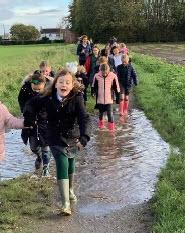
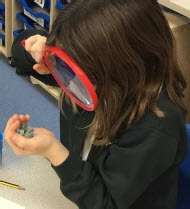
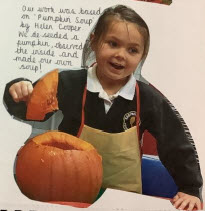
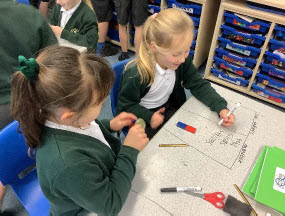
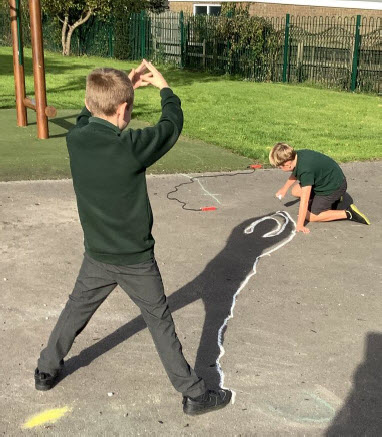
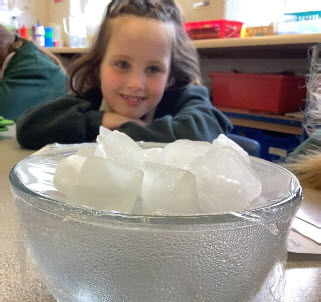
All children are encouraged to develop and use a range of skills including observations, planning and investigations, as well as being encouraged to question the world around them and become independent learners in exploring possible answers for their scientific based questions. Specialist vocabulary for topics is taught and built up, and effective questioning to communicate ideas is encouraged. Concepts taught should be reinforced by focusing on the key features of scientific enquiry, so that pupils learn to use a variety of approaches to answer relevant scientific questions.
Implementation
At Eastrington Primary School, teachers create a positive attitude to science learning within their classrooms and reinforce expectation that all children are scientists and capable of achieving high standards in science.
Alongside the ‘The National Curriculum programmes of study for Science 2014’ and, ‘Understanding of the World’ in the Early Years Foundation Stage, science teaching at Eastrington Primary School involves adapting and extending the curriculum to match all pupils’ needs. To support the well-structured and progressive curriculum, Eastrington School makes use of a range of engaging resources such as those provided by Science, Technology, Engineering and Mathematics (STEM), Association for Science Education (ASE) and Explorify ,Science is taught as discrete units and lessons to ensure coverage and where possible, Science units are linked to class topics.
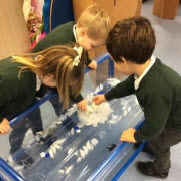
We ensure that all children are provided with rich learning experiences that aim to:
• Prepare our children for life in an increasingly scientific and technological world today and in the future.
• Help our children acquire a growing understanding of the nature, processes and methods of scientific ideas.
• Help develop and extend our children’s scientific concept of their world.
• Build on our children’s natural curiosity and developing a scientific approach to problems.
• Encouraging open-mindedness, self-assessment, perseverance and developing the skills of investigation – including: observing, measuring, predicting, hypothesising, experimenting, communicating, interpreting, explaining and evaluating.
• Develop the use of scientific language, recording and techniques.
• Develop the use of computing in investigating and recording. • Make links between science and other subjects.
Impact
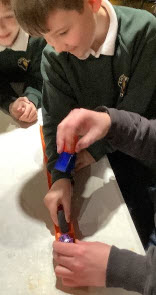
The impact and measure of this is to ensure children not only acquire the appropriate age-related knowledge linked to the science curriculum, but also skills which equip them to progress from their starting points, and within their everyday lives.
All children will have:
• A wider variety of skills linked to both scientific knowledge and understanding, and scientific enquiry/investigative skills.
• A richer vocabulary which will enable to articulate their understanding of taught concepts.
• High aspirations, which will see them through to further study, work and a successful adult life.
Let's Talk About School




A wonderful environment in which to learn, play and grow.