Eastrington Primary
Enrich - Enjoy - Excel
Portington Road, Eastrington, Goole. DN14 7QE
To find out where we are visit view a map on our Contact Us page.
Computing
Computing and Online Safety
Subject Coordinator- Mrs. Rachael Kay
Intent
It is our intent at Eastrington Primary School to provide all of our children with a high-quality education in computing which provides access to an ever changing and expanding digital world. We wish to develop a love of computing and provide children with the ability to enhance their knowledge, skills and understanding through different types of media whilst keeping safety at the forefront of their minds.
We believe that we give our children the tools they need to succeed in a digital world. To do this effectively, children must have a clear understanding of the meaning of personal information and recognise their own responsibility in safeguarding this. Children will be taught about their digital footprint and where to seek support and advice should they need it. We believe a strong understanding of these things will enable children to access modern technologies and communicate effectively whilst developing an ever-increasing understanding of how to keep themselves safe from evolving dangers in the digital world.
At Eastrington Primary School we want children to become digitally literate by developing a range of transferable skills which can make them active participants in a digital world and prepare them for the world of work. We aim to encourage children to use, express themselves and develop their ideas through a range of information technology. A core aspect of our computing teaching will be the teaching of computer science in which pupils are taught the principles of information and computation, how digital systems work, and how to put this knowledge to use through programming.
Implementation
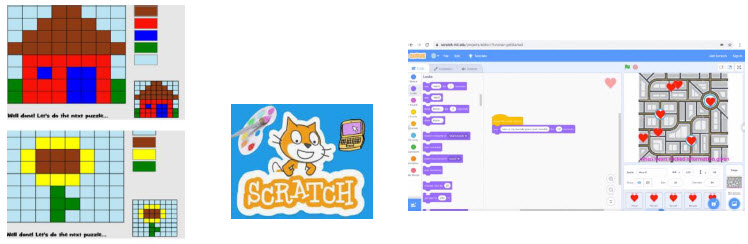
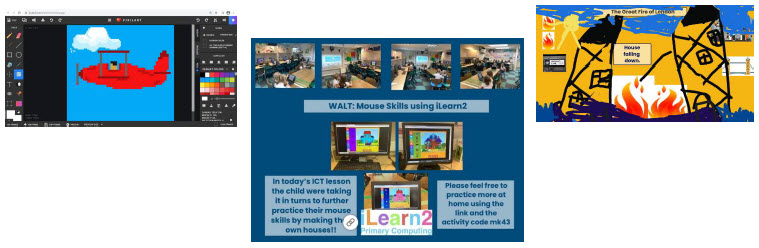
At Eastrington Primary School we follow the National Curriculum programme of study which covers all three areas of Computing; Computer Science, Information Technology and Digital Literacy. We have carefully selected two schemes of work that we feel more than adequately cover the National Curriculum statements for Key Stage 1 and Key Stage 2. Computing is planned, taught using the scheme Teach Computing provided by the National Centre for Primary Computing and supported by iLearn2 as a resource bank.
https://www.ilearn2.co.uk/how-does-it-work-html/
These creative and exciting lessons are carefully timetabled so that each class has access to at least an hour a week using either laptops or iPads. Whilst we use the units provided in this scheme of work, teachers adapt and change their medium-term plan so that strong curriculum links can be made with all subjects.

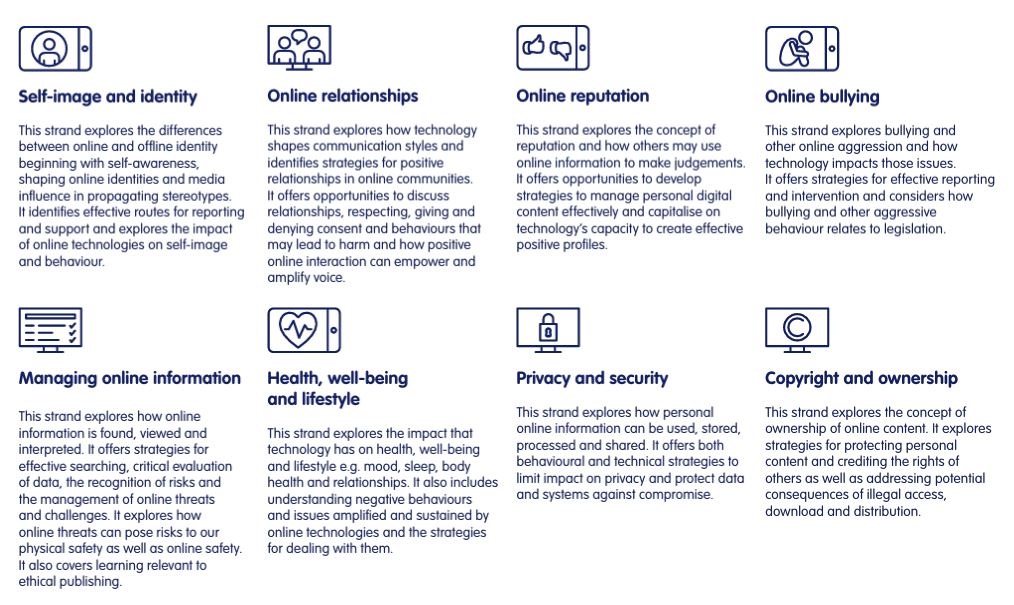
In today’s digital world, children are growing up surrounded by technology that helps them learn, play, and communicate. This online curriculum supports pupils in becoming confident, safe, and responsible digital citizens by teaching them how to use the internet positively and thoughtfully. Linked to the Education for a Connected World framework, the curriculum develops essential knowledge and skills such as online safety, respectful communication, managing information, and understanding digital wellbeing. Through engaging and practical learning experiences, pupils are empowered to make smart choices online and build strong foundations for their future digital lives.
Aligned with the Education for a Connected World framework, our Online Safety Curriculum develops pupils’ understanding across key strands including:Self-Image and Identity, Online Relationships, Online Reputation, Managing Online Information, Health, Wellbeing and Lifestyle, Privacy and Security, and Copyright and Ownership. Through age-appropriate, engaging activities, pupils learn how to communicate respectfully online, protect their personal information, recognise reliable content, and make positive choices that support their wellbeing. The curriculum empowers children to navigate the digital world safely while building strong foundations for lifelong digital citizenship.
These important aspects of online safety are every changing in this digital world therefore, any new risks to child welfare will result in extra lessons that inform, advise and educate our children linked closely with PSHE. National Safer Internet Day is celebrated each year and weekly online safety bulletins are added to the whole school newsletters for our pupils and their families.
Impact
Our fun, engaging and challenging Computer lessons taught by confident, knowledge rich staff to equip our children to be proficient users of technology both now and throughout their lives.
We want our children to be:
· Confident and competent users of technology
· Critical thinkers that can solve problems
· Responsible, respectful and safe users of data, information and communication technology
· Creative and imaginative using technology to present, record and share their work to a wider audience
· Aware of technological uses and developments in the wider world
Let's Talk About School




A wonderful environment in which to learn, play and grow.