Address: Portington Road, Eastrington, Goole. DN14 7QE
Tel: 01430 410219 Email: eastrington.primary@eastriding.gov.uk
To find out where we are visit view a map on our Contact Us page.
Eastrington Primary School - "Enrich Enjoy Excel"

Welcome to the Religious Education Page

Religious Education and World Views at Eastrington Primary School
Subject Coordinator- Mrs Rachael Kay
At Eastrington Primary School we follow the East Riding and Hull Agreed Syllabus for Religious Education in accordance with the East Riding’s ‘Standing Advisory Council of Religious Education’ (SACRE).
This syllabus promotes an enquiry approach to learning, with less content it emphasises establishing an understanding of the core concepts, with an expectation that the topics will be taught in a deeper way, using a multi – disciplinary approach. Children have the opportunity to develop ‘powerful knowledge’, about the religions and worldviews they study, this in turn enables them to interpret the world around them.

Intent
Our children are growing up in an increasingly diverse world. In RE children learn about religions and worldviews, which enables them to ask challenging questions about meaning and purpose of life, beliefs about God, Issues of right and wrong and what it means to be human. In RE our children learn about religion and worldviews in local, national and global contexts, this promotes an increasing awareness of the impact diversity can have on individuals and society. RE helps to develop religious literacy, deepening as children move through school, as they discover, explore and interpret different responses to life’s big questions.
The RE curriculum at Eastrington Primary School is organised to support the development of children’s knowledge of religious and non-religious beliefs and worldviews, practices and ways of life and enable children to make links between these. The RE curriculum is also designed to support positive attitudes and values, and encourage children to reflect and relate learning to their own experiences.
The syllabus recommends that any themes or ‘Big Questions’ are explored by investigating and reflecting on the responses of more than one religion or belief system. All the units therefore include an exploration of these themes or big questions through different perspectives. Each unit encourages and promotes the contemplation of key concepts or themes within religions and comparing these with responses in other faiths, religions and belief systems.
The aims of RE The curriculum for RE aims to ensure that all pupils develop religious literacy through
• Knowing about and understanding a range of religions and worldviews, learning to see these through the disciplines of Theology, Philosophy and Social Sciences
• Expressing ideas and insights about the nature, significance and impact of religion and worldviews through a multidisciplinary approach whilst engaging critically with them
• Gaining and deploying skills taken from the disciplines of Theology, Philosophy and Social Sciences to enhance learning about religions and different worldviews
Worldviews
The inclusion of worldviews enables young people to connect with religion(s) in a much more profound and inclusive way. A worldviews approach enables pupils to explore and gain ownership of their own perspectives, fitting new understanding into their existing mental framework. Pupils then learn about religion and beliefs through connecting and contrasting them with our own way of seeing the world.
At Eastrington Primary School, we are committed to providing our children with an exciting and positive learning environment, in which they have the opportunity to develop their knowledge and understanding of religions to support their spiritual, moral, social and cultural development.
What is a worldview?
A worldview is a person’s way of understanding, experiencing and responding to the world. It can be described as a philosophy of life or an approach to life. This includes how a person understands the nature of reality and their own place in the world. A person’s worldview is likely to influence and be influenced by their beliefs, values, behaviours, experiences, identities and commitments.
Implementation
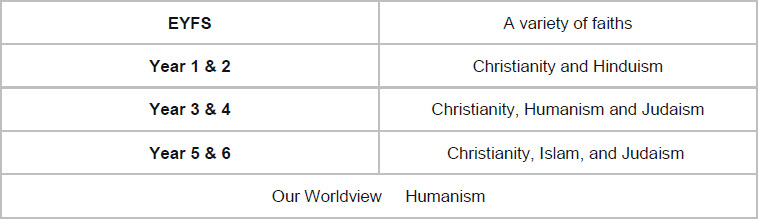
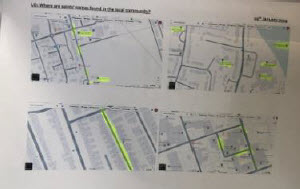
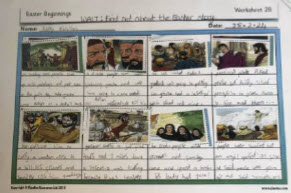
Coverage, following the agreed syllabus, is planned to link with key dates and religious festivals to provide opportunities to celebrate festivals and religions with greater consistency and contextual relevance. Work is recorded in RE books and is evidenced with a variety of outcomes, including written pieces, artwork and photographs.
As children progress through the programme of study, they are able to look deeper into spiritual, ethical, moral and social issues and with increasing breadth across different religions and worldviews through time and around the world.
Three mutually supportive disciplines have been identified (lenses) which help pupils to see Religious Education and world views form different perspectives, giving a balanced approach to teaching and learning. These lenses are:

Learning is planned and sequenced to support pupils in building an ever-increasing picture over time, constantly building their knowledge and understanding of key subject knowledge and specialist vocabulary around concepts. This ensures that the investigation, exploration and reflection of their own and others’ responses to ‘Big Questions’ can continuously increase in depth, breadth and complexity.
As pupils move through the Religious Education curriculum these ‘Big Questions’ increase in complexity, depth and breadth, the expectations of pupils to explain ‘what’ the beliefs, practices and values are and the relationships between them, as well as explaining ‘why’ these are important and may make a difference to people, and ‘how’ they relate, change or impact on a wider world view also increases.

Impact
All human beings have a need to:
• celebrate
• mark significant moments
• tell their story
• connect with the past
• feel part of the community
• see purpose and meaning in their lives
• to ask ultimate questions.
This is the spiritual core of everyone whether they belong to a religious tradition or not. Successful religious education provides insights into the values and beliefs of others, and
strives to develop a sense of awe and wonder. Children at our school enjoy learning about religion and worldviews and actively ask questions. Through our Religious Education and World Views Curriculum, children are developing an understanding of their own beliefs and other people’s beliefs, cultures and ways of life. Our curriculum offers children the means by which they can learn to understand how other people choose to live and to understand. As such, R.E. is invaluable for children in an ever-changing world.
Curriculum Documents
Our curriculum documents will be added to this area of the website.
Curriculum Subjects
Awards
Schools can prove excellence by gaining industry standard awards. View awards we have attained.
Free News Service
Click on the icon to the left to subscribe to a free RSS feed school news service.
SEND Local Offer
Visit our Local Offer Page where you can find out about our SEN provision.
Follow Us
You can also follow us on social media. Click on the icons at the very bottom of this web page.
Contact Us Form