Aims
The aim of Eastrington Primary School is to ensure that all our children are happy, fulfilled and challenged in a rich learning environment, which aims to cater for their individual needs, preparing them well for the next stage in their education and develops a love for learning. We see all children as equals – whatever their needs and irrespective of ability, race or gender.
Eastrington Primary School believes:
· a child with SEND should have their needs met.
· a child with SEND should (where it is in the child’s interests) have the opportunity to learn and play with typically developing peers of the same age.
· a child with SEND should have the chance to participate fully in the extracurricular life of the school.
· the views of the child should be sought and considered.
· parents have a vital role to play in supporting their child’s education.
· children with SEND should be offered full access to a broad, balanced and relevant education, including an appropriate curriculum for the foundation stage and the National Curriculum.
SEND Code of Practice
The SEND Code of Practice sets out statutory guidance for schools. A revised SEND Code of Practice was implemented in September 2014, with the main aim of developing better partnerships between children, parents/carers, educational settings, health professionals and social care.
The revised SEND Code of Practice can be downloaded here:
https://assets.publishing.service.gov.uk/government/uploads/system/uploads/attachment_data/file/398815/SEND_Code_of_Practice_January_2015.pdf
Our Information Report can be found here: SEND Information Report 25
The Local Offer
East Riding of Yorkshire Council’s Local Offer
The revised Code of Practice also requires Local Authorities to publish the ‘Local Offer’, which sets out the full range of provision for children with SEN and disabilities in the local area. The ERYC Local Offer can be found by following the link below:

https://www.eastridinglocaloffer.org.uk/
What are Special Educational Needs and Disabilities?
Under the new SEND Code of Practice (DfE, 2014), a child is deemed to have Special Educational Needs or Disabilities, or SEND, if he or she has ‘significantly greater difficulty in learning than the majority of others of the same age’, or his or her disability ‘prevents or hinders him or her from making use of facilities of a kind generally provided for others of the same age in a mainstream school’. Special educational provision is needed for him or her, over and above that which can be met through high quality classroom teaching and differentiation.
Broad areas of need are identified as:
· communication and interaction;
· cognition and learning;
· social, emotional and mental health difficulties;
· sensory and/or physical needs.
These may be for a short period or throughout a child’s educational life. They may be identified before a child has even entered school or they may come to be recognised at a specific point in their education.
Specific Learning Needs
As an inclusive school, we welcome all children regardless of need. Some of our children have specific learning needs such as:
· Dyslexia
· Dyscalculia
· Behaviour Emotional Social Difficulty
· Cognition and Learning
· Physical
· Speech and Language
· Autistic Spectrum Disorder
Below, we have endeavoured to provide an overview of these most common learning needs that we encounter in school.
Dyslexia
Dyslexia is a learning difficulty that primarily affects the skills involved in accurate and fluent word reading and spelling. Characteristic features of dyslexia are difficulties in phonological awareness, verbal memory and verbal processing speed. Dyslexia occurs across the range of intellectual abilities.
Co-occurring difficulties may be seen in aspects of language, motor co-ordination, mental calculation, concentration and personal organisation, but these are not, by themselves, markers of dyslexia.
The following website provides some excellent information if you child has dyslexia or if you have any concerns:
http://www.parentchampions.org.uk/
https://www.dyslexiaoutreach.co.uk/resources/strategies-for-parents/

Dyscalculia
Dyscalculia is a condition that affects the ability to acquire arithmetical skills. Dyscalculic learners may have difficulty understanding simple number concepts, lack an intuitive grasp of numbers and have problems learning number facts and procedures. Even if they produce a correct answer or use a correct method, they may do so mechanically and without confidence.

Behaviour Emotional Social Difficulty (BESD)
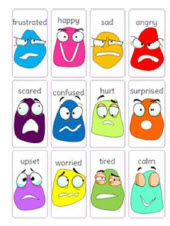
The SEN Code of Practice describes BESD as a learning difficulty where children and young people demonstrate features of emotional and behavioural difficulties such as: being withdrawn or isolated, disruptive and disturbing, being hyperactive and lacking concentration, having immature social skills or presenting challenging behaviours arising from other complex special needs.
This term includes children and young people with emotional disorders and conduct disorders/hyperkinetic disorders (including attention deficit hyperactivity disorder, ADHD). Furthermore, children and young people may have behavioural difficulties that are less obvious, for example, those with anxiety, who self-harm, have school phobia or depression and those whose behaviour or emotional wellbeing are seen to be deteriorating.
Cognition and Learning
General learning difficulties may show themselves in the following ways: low levels of attainment across the board in all forms of assessment including baseline assessments; difficulty in acquiring skills (notably in and numeracy) on which much other learning in school depends; difficulty in dealing with abstract ideas and generalising from experience; a range of associated difficulties, notably in speech and language and in social and emotional development.

Physical
The term ‘physical disabilities’ is broad and covers a range of disabilities and health issues, including both congenital and acquired disabilities. Within that range are physical disabilities or impairments that interfere with a child’s ability to attain the same developmental milestones as his or her peers.
An example of this is dyspraxia – a problem with the body’s system of motion that interferes with a person’s ability to make a controlled or coordinated physical response in a given situation.

Speech and Language
Speech and language disorders refer to problems in communication and related areas such as oral motor function. These delays and disorders range from simple sound substitutions to the inability to understand or use language or use the oral-motor mechanism for functional speech and feeding.
Autistic Spectrum Disorder
Autism Spectrum Disorder (ASD) is a life-long developmental disability that affects the way a person is able to communicate and relate to people around them. Some people with ASD will have learning disabilities. Others have average or above-average intelligence: included in this group are those with Asperger’s Syndrome (or high-functioning autism). Recognised characteristics of ASD: communication impairment (problems with word usage and understanding), difficulties with social skills and empathy with others, a narrow range of interests and difficulties with imagination, a developmental disorder which begins before age three and affects all aspects of life.

Support for Parents and Carers
The Neurodiversity Service
The Children’s Neurodiversity service includes the following core services:
• The Front Door Team
• Autism (ASD) & Attention Deficit Hyperactivity Disorder (ADHD) assessment and screening service
• Children’s Community Team for Learning Disabilities (CTLD)
• Children’s Sensory Service
• Children’s SEND Sleep Support Service.
https://www.humber.nhs.uk/Services/hull-and-east-riding-childrens-neurodiversity-service.htm

FISH
FISH services were set up as part of the Special Educational Needs (SEN) Code of Practice. Every Local Authority must provide Parent Partnership services to parents and carers of children with Special Educational Needs in their area. FISH provides free and impartial information, support and advice about education issues so that parents can be fully involved in decisions about their child’s education.
https://www.eastriding.gov.uk/living/children-and-families/families-information-service-hub/
SENDIASS
SENDIASS offers impartial, confidential information, advice and support for parents and carers of children and young people (aged 0-25) and children and young adults (up to the age of 25) with special educational needs or disabilities.
https://www.eastridingsendiass.org.uk/

British Dyslexia
The British Dyslexia Association (BDA) is the voice of dyslexic people. We aim to influence government and other institutions to promote a dyslexia friendly society, that enables dyslexic people of all ages to reach their full potential. The BDA promotes early identification of specific learning difficulties (SpLD) and support in schools to ensure opportunity to learn for dyslexic learners.
https://www.bdadyslexia.org.uk/

The National Autistic Society
The National Autistic Society are the leading UK charity for people with autism (including Asperger syndrome) and their families. They provide information support and pioneering services and campaign for a better world for people with autism.
https://www.autism.org.uk/

ADDISS
The National Attention Deficit Disorder Information and Support Service provide people-friendly information and resources about Attention Deficit Hyperactivity Disorder to anyone who needs assistance – parents, sufferers, teachers or health professionals.
http://www.addiss.co.uk/
Downright Special
A very informative website for parents/carers regarding the support that Downright Special give to local families and information about Down Syndrome.
https://www.downrightspecial.co.uk/

Fetal Alcohol Spectrum Disorder
This is a useful website offering a wealth of information around Fetal Alcohol Spectrum Disorder.
https://nationalfasd.org.uk/

National Deaf Children’s Society
An informative website for families who are affected by hearing impairments.
https://www.ndcs.org.uk/
BBC Dancemat Typing
A free BBC website with an introduction to touch typing for children aged 7 to 11.
https://www.bbc.co.uk/bitesize/articles/z3c6tfr

BBC Bitesize
A well regarded free site.
https://www.bbc.co.uk/bitesize