
Learning in the Foundation Stage at Eastrington Primary School
At Eastrington Primary School we follow the Early Years Statutory Framework. Our play based curriculum has been designed specifically to meet the needs of our youngest learners with an emphasis on the unique child at the centre. The curriculum takes a holistic approach to teaching and learning and is divided up into 2 main areas, the prime areas and the specific areas.
The Prime Areas – The prime areas of learning are divided into 3 sections, Personal, Social and Emotional development, Communication and Language and Physical development. The prime areas are important because they lay the foundations for children’s success in all other areas of learning and of life.
Personal, Social and Emotional Development
In this area children develop confidence and self-esteem. They learn about relationships and how to express their feelings. Children learn about sharing, taking turns and negotiating with others. They begin to understand rules but also develop independence and responsibility.
Communication and Language
In this area children talk about what they want and feel, likes and dislikes. They have opportunities to express themselves through role-play and they can enjoy stories, songs, poems and rhymes. Children use language to describe past and present experiences, and sequence events. Children will learn to speak in small and large groups and listen and follow instructions, also listening carefully to others and demonstrate asking interesting and appropriate questions.
Physical Development
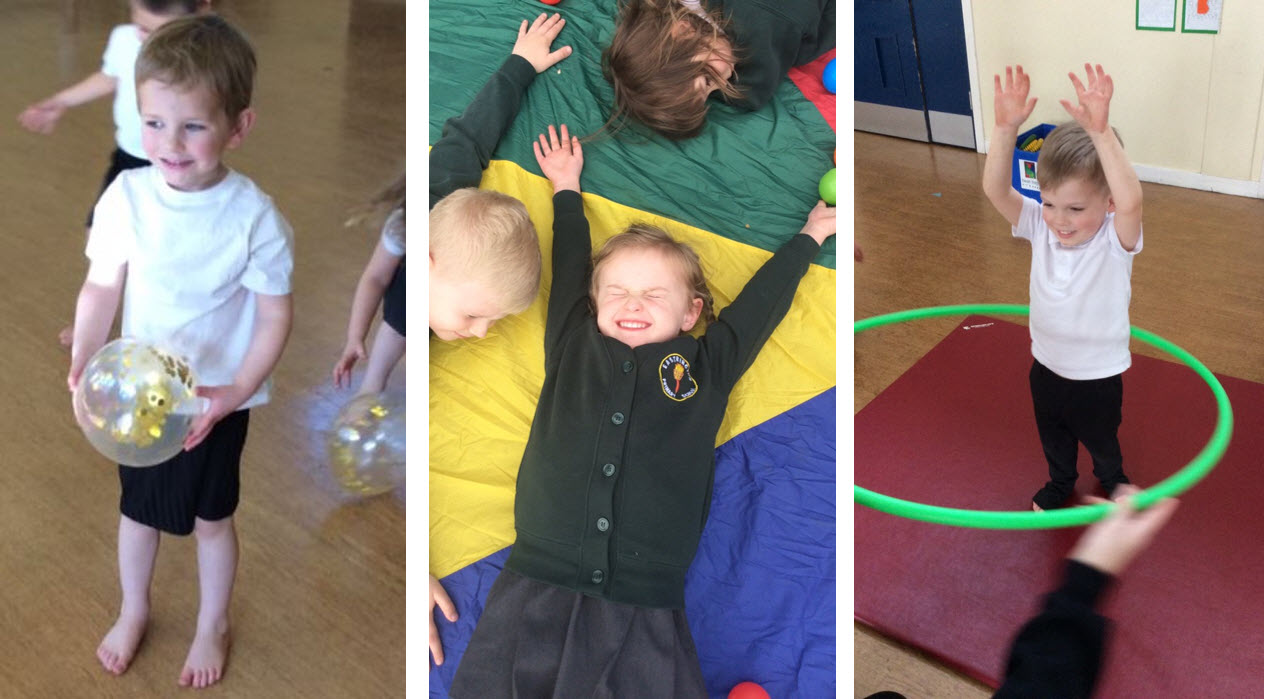
This area sees children playing and learning inside and outside. They become good at moving, climbing, controlling, catching, throwing and coordinating with more and more skill. They will get opportunities to chase, race, jump, balance and play with a partner and in teams. Children will find out about keeping healthy as well as learning to dress and un-dress themselves. They will use different types of tools for drawing, painting, cutting and sticking to develop fine motor skills.
The Specific Areas – The specific areas are divided into 3 sections, literacy, mathematics, understanding the world and expressive arts and design. The specific areas provide the range of experiences and opportunities for children to broaden their knowledge and skills.
Literacy
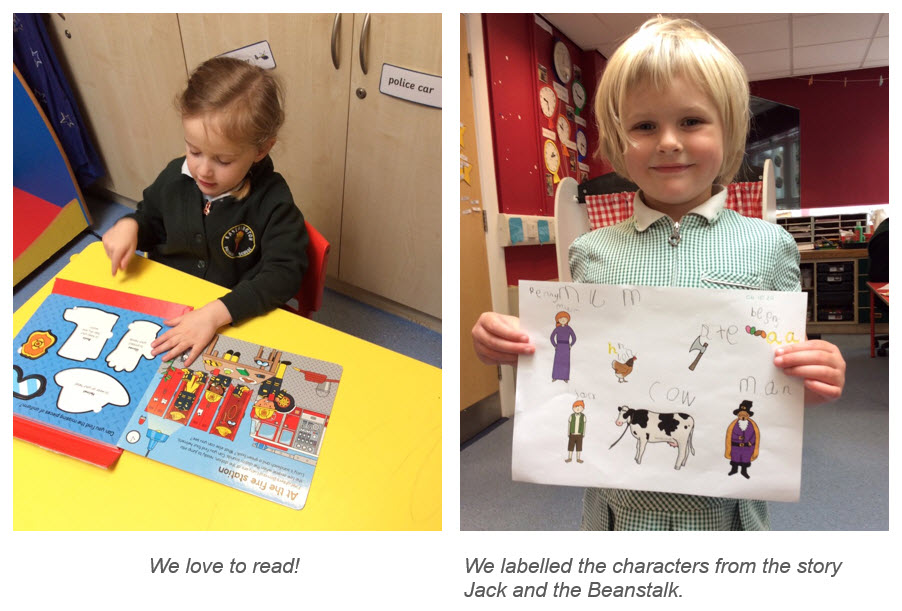
In this area children handle and share books with others. Children will have chances to see letters and words written down, they will learn the sounds of the alphabet through phonic sessions and speaking and listening activities. They will start to hear the different sounds that make up a word and apply this knowledge when looking at words in books and begin to read and write captions and sentences.
Mathematics
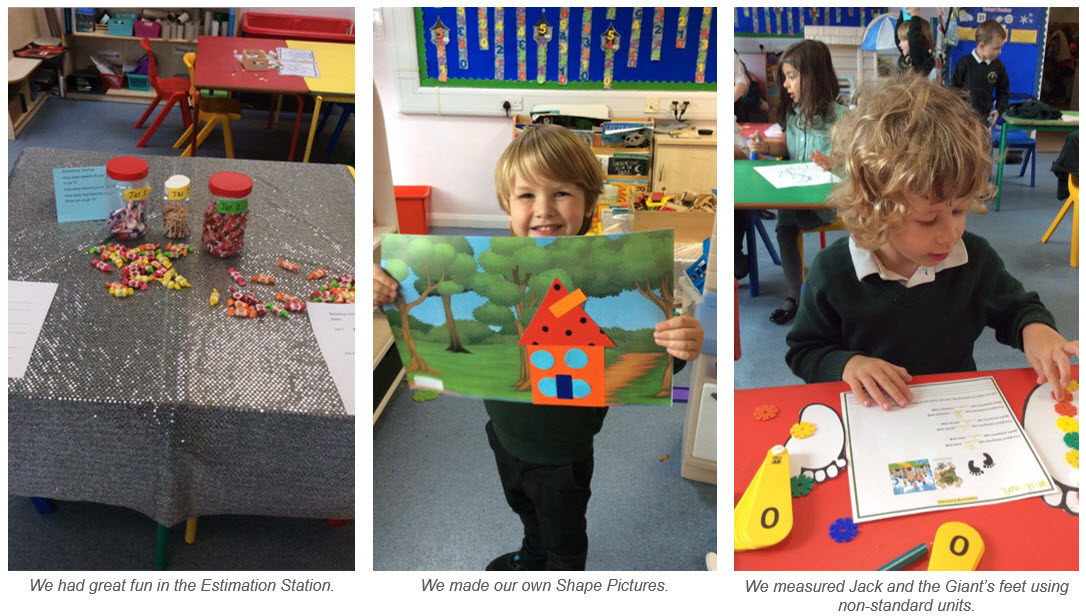
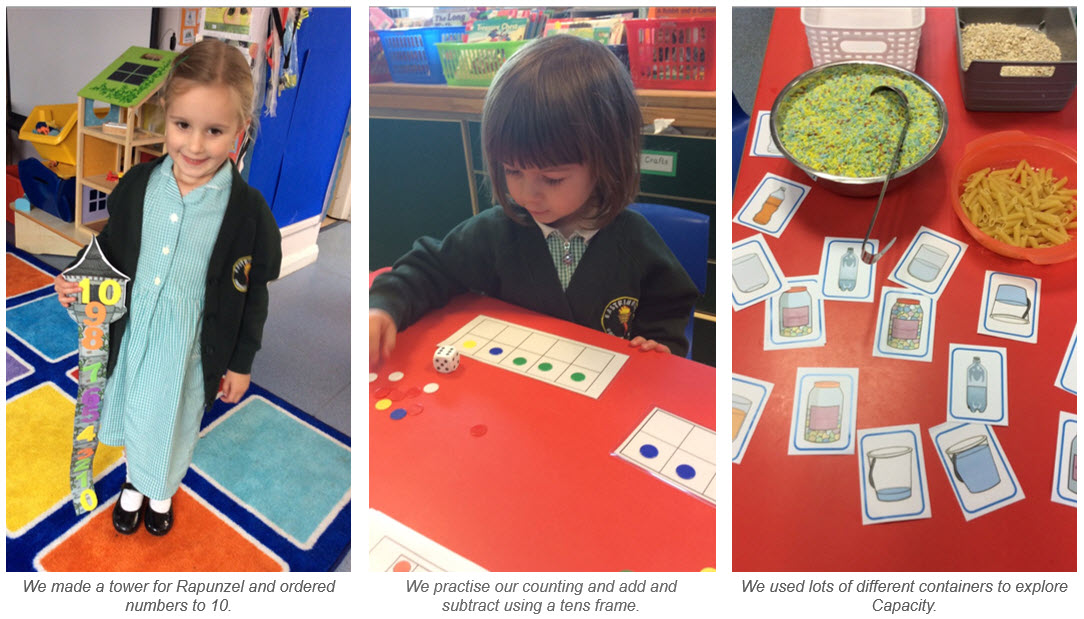
In this area the children sort and group objects and materials, explaining why they have done something. They will compare height, weight, size and texture. Children will begin to use positional language to tell where things are and to put things in order. Children have opportunities to make models with shapes and talk about them and what they look like. They will then notice and make patterns with them. Children will recognise numbers around them, they will begin to count, add objects together and take them away. They will start to put events in order and investigate how to solve practical problems.

Understanding the World
In this area the children have opportunities to explore and investigate the world around them, they will be able to look at and talk about objects, materials, living creatures and plant life, noticing details, similarities and difference. They will try things out and come to some conclusions and see reason. Children will have support to record findings by drawing, using the computer and camera. They will begin to know about different people and their cultures, traditions and places in the community.

Expressive Arts and Design
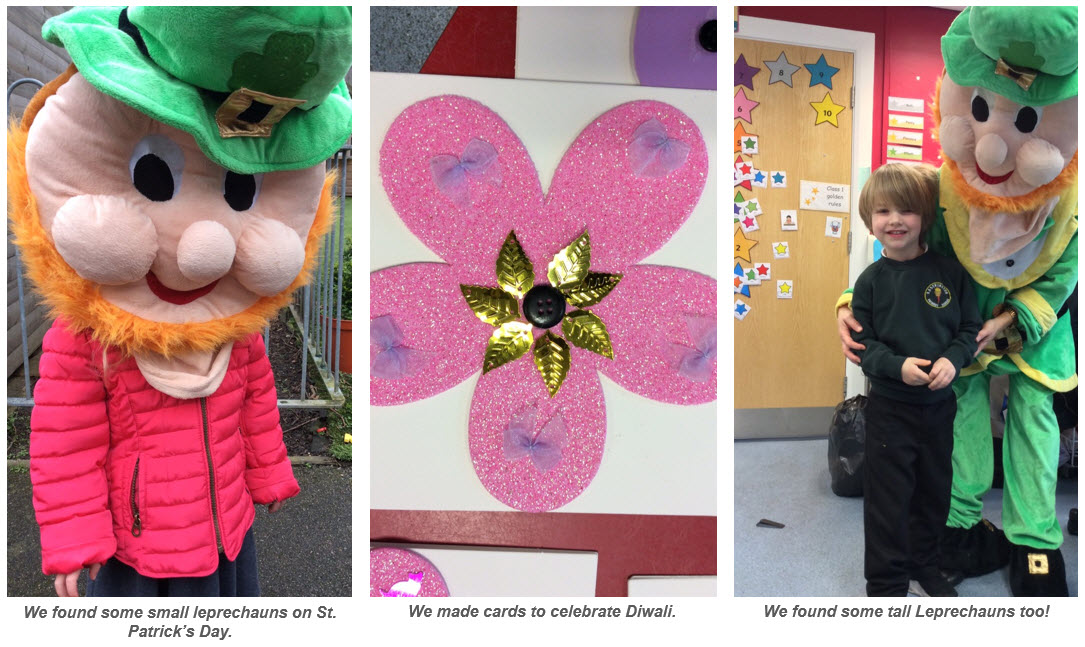
In this area, children will express their own thoughts, ideas and feelings through drawing, painting and model making. They will have the chance to design and make their own creations using man-made and natural materials. They will explore colour, shape and texture using their senses. Children will be able to listen to and make their own music, dance, sing songs and take part in imaginative role play with others.


The Characteristics of Effective Learning
The above areas are all about what the children learn but an equal emphasis is also placed on how the children learn. The characteristics of effective learning are the way in which children engage with other people and their environment and are divided into 3 sections, playing and exploring, active learning and creating and thinking critically.
Playing and Exploring
This looks at how children engage with people and the environment surrounding them. We want our children to find out about things and explore. We want them to play with what they know and be willing to ‘have a go’ no matter how big or small the challenge.
Active Learning
We want our children to find out about things and explore. We want them to play with what they know and be willing to ‘have a go’ no matter how big or small the challenge.
This looks at children’s motivation and we want children to get involved in activities and be able to concentrate, particularly on activities that they have chosen themselves. We want children to persevere in what they choose to do and also have a sense of pride and achievement in what they set out to do
Creating and thinking critically
This is about children’s thinking and we want children to have their own ideas, make links between what they know and what they learn and also be in charge of the way they do things.
Session Times and Options
Children are admitted to the pre-school at the start of the school term following their third birthday.
We offer 30 hours free childcare as an extension to the universal 15 hours free childcare (subject to availability and eligibility). You can check your eligibility here:
https://www.childcarechoices.gov.uk/
We offer a variety of session times and, where we are able, we work with parents to accommodate childcare needs. If your desired session times are unavailable we will always try to find an alternative time for your child.
| Morning | 8.30am- 11.30am
|
| Morning and Lunch | 8.30am-12.00pm
|
| Afternoon | 12.30pm-3.30pm
|
…
|
Session Cost |
£12 |
|
Lunchtime Supervision |
£2 |
|
School lunch |
£2.30 |
…
Come in and see us! We welcome prospective parents to come and have a look around, please contact school to make an appointment:
Tel: 01430 410219